
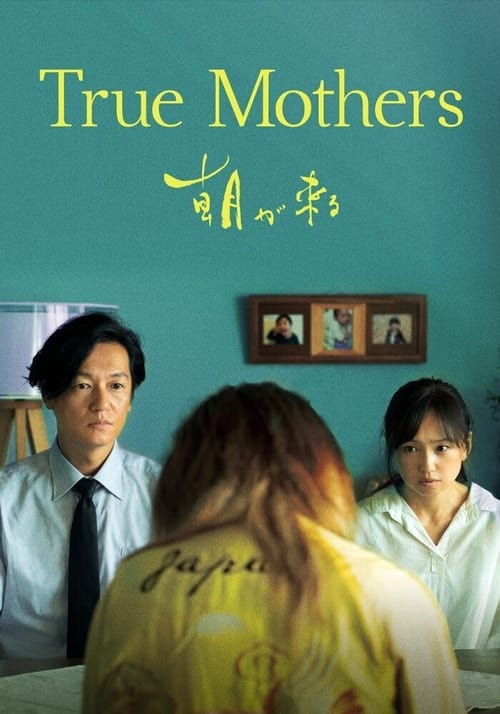
In a world where 'mother' is often seen as the birth giver, 'True Mothers' (True Mothers), a Japanese film from the pen of Naomi Kawase, dares to challenge that belief. With the story of two mothers connected by one child, the film plunges us into pain, love, and boundless forgiveness through a lens that is both tender and painful at the same time.
Plot Summary (No Spoilers)
'True Mothers' tells the story of a married couple, Satoko (Hiromi Nagasaku) and Kiyokazu (Arata Iura), who cannot have children naturally. They decide to adopt a baby from an adoption agency, a child abandoned by Hikari (Aju Makita), a 14-year-old girl who became pregnant unintentionally and could not raise the child. Years pass, and the Kurihara family lives happily with their son Asato, until one day Hikari returns with a desire to see her child again. This event forces both families to face painful truths and make the most difficult decisions of their lives.
Acting and Characters
Hiromi Nagasaku as Satoko is the heart of the film. She brilliantly conveys deep love and hidden pain, especially in scenes where she confronts Hikari; her eyes say everything without words. Aju Makita as Hikari is equally impressive, showing the confusion and vulnerability of a young girl burdened with heavy responsibility. Arata Iura as the quiet but understanding husband serves as the rock holding the family together. The performances of all actors bring the film to life and make it believable.
Direction, Cinematography, and Music
Naomi Kawase, the Japanese female director, skillfully tells a story blending realism with beautiful symbolism. The cinematography is meticulous, whether capturing nature in wide shots or close-ups of characters' faces. The score by Yui Onodera is simple yet emotional, enhancing the film's atmosphere. Especially in quiet scenes, the music perfectly fills the emotional void.
Editorial Analysis
'True Mothers' is not just a film about adoption; it deeply questions the definition of 'mother'. The film shows that a mother's love is not limited to blood ties but arises from care and sacrifice. At the same time, it portrays the pain of the birth mother who suffers from separation. The film does not judge anyone but allows the audience to understand everyone's feelings. It also reflects Japanese social issues such as teenage pregnancy and social stigma. The film moves slowly but is filled with suppressed emotions, making viewers think and feel along with it.
Verdict
'True Mothers' is a film suitable for those who enjoy family dramas focusing on emotion and thought rather than action. If you are ready to open your heart and watch a story that is both painful and warm, this film will make you question love and the meaning of the word 'mother' for sure.
Screenshots


👍 Pros
- +Excellent performances, especially from the two lead actresses
- +Script conveys deep and subtle emotions
- +Beautiful cinematography and music that matches the atmosphere
👎 Cons
- −Slow pacing may feel drawn out for some viewers
- −Some issues are not fully resolved
Top Cast




FAQ
The film tells the story of a married couple who adopt a baby from a 14-year-old mother, and years later, the birth mother returns to see her child. It explores the meaning of 'mother' from different perspectives.
Yes, the film has many touching and emotional scenes, especially due to the actors' deep portrayal of pain and love.
The film is adapted from a Japanese novel titled 'Asa ga Kuru' by Mizuki Tsujimura, which was inspired by real events related to adoption and teenage pregnancy.